Aug 18, 2026
Orbit
Project 01. A hot-swap floating showcase — one stand, swap whatever hangs in the workshop that week. Furniture is done. The hover is the work.
View Project →I Wanted the Bubble Clock to Float
The original idea was never a desk clock.
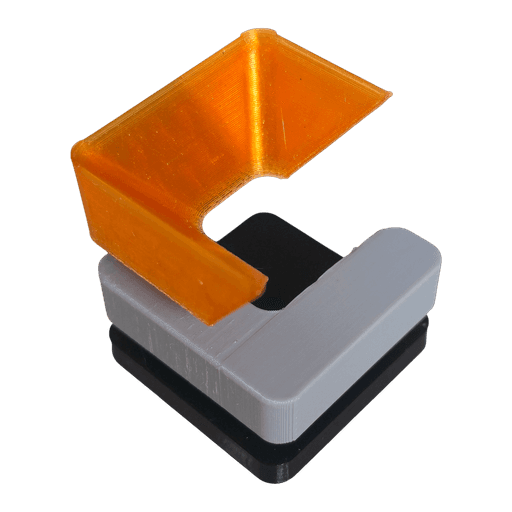
It was a speech-bubble hanging in air. Magnets in a C-arm, magnets in a puck, the clock in the gap — a lamp holding a shade, except the shade tells the time.
I still want that.
I just did not start there.
The clock had to exist first
I was still learning the things a hover would punish: how plastic actually prints, how pins go fat and holes go tight, how a nice model on screen becomes a brick on the plate.
So I made the clock first. Sit it on a desk. Get the silhouette right. Get a quartz movement to nest without glue. Publish it. The Bubble Desk Clock is that object.
The float did not go away. It waited.
The day the clock sat, I opened a new CAD file for the stand.
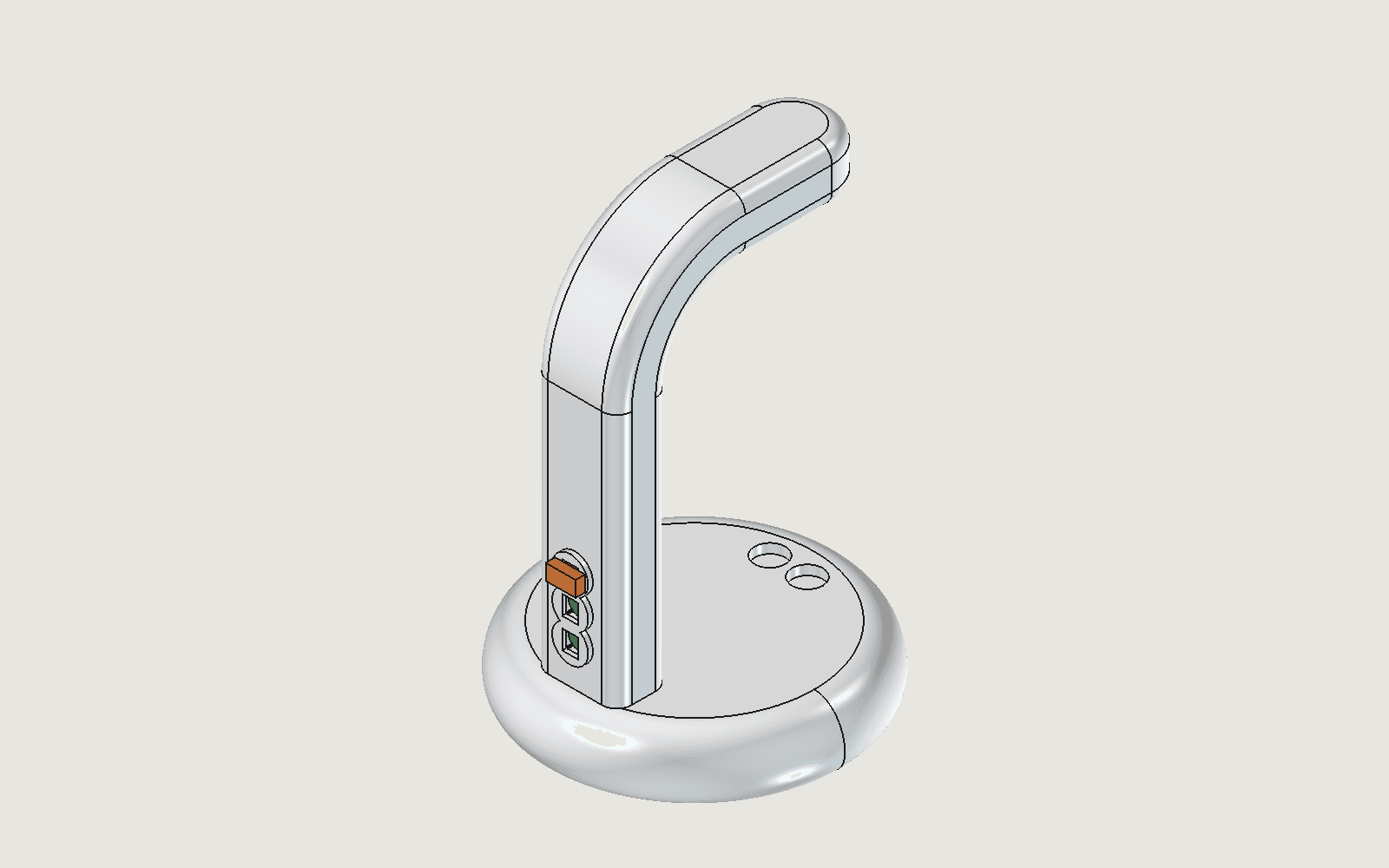
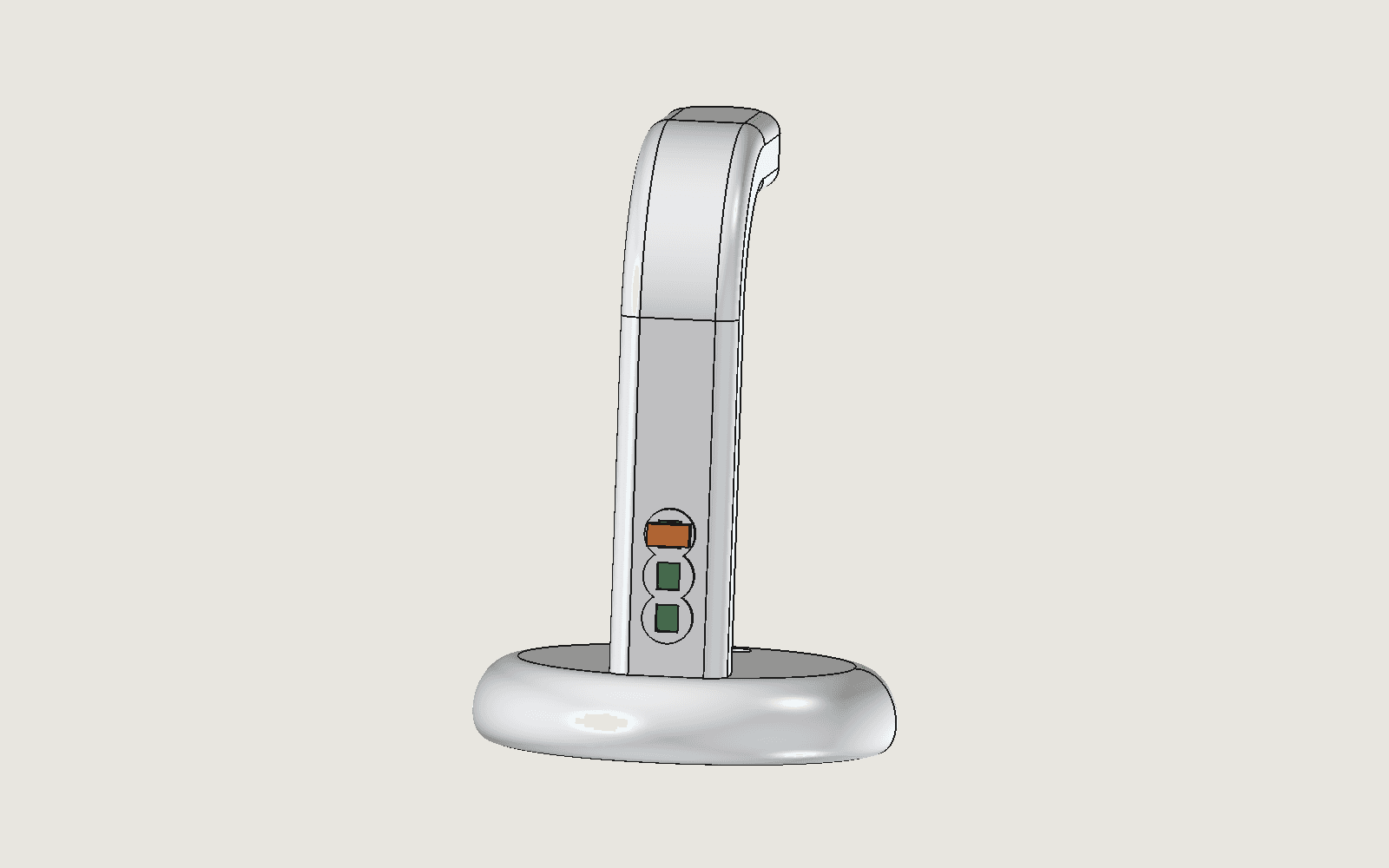
Then the height became the project
A fixed stand would have been a weekend. One gap, one print, magnets in, done.
I did not want one gap. The clock is a bubble with a pointed stand of its own — different desks, different heights, maybe not even this clock later. So the C had to slide. Inner post planted in the puck, outer arm riding it, a lock that would not drop the overhang on your fingers.
That is what ate the calendar. Not the hover. The furniture.
The sweeping curve became a lamp: Ø100 puck, tight 90° elbow, a 28 × 18 section that could actually print and slide. Worse as a sculpture. Better as a part I could hold.
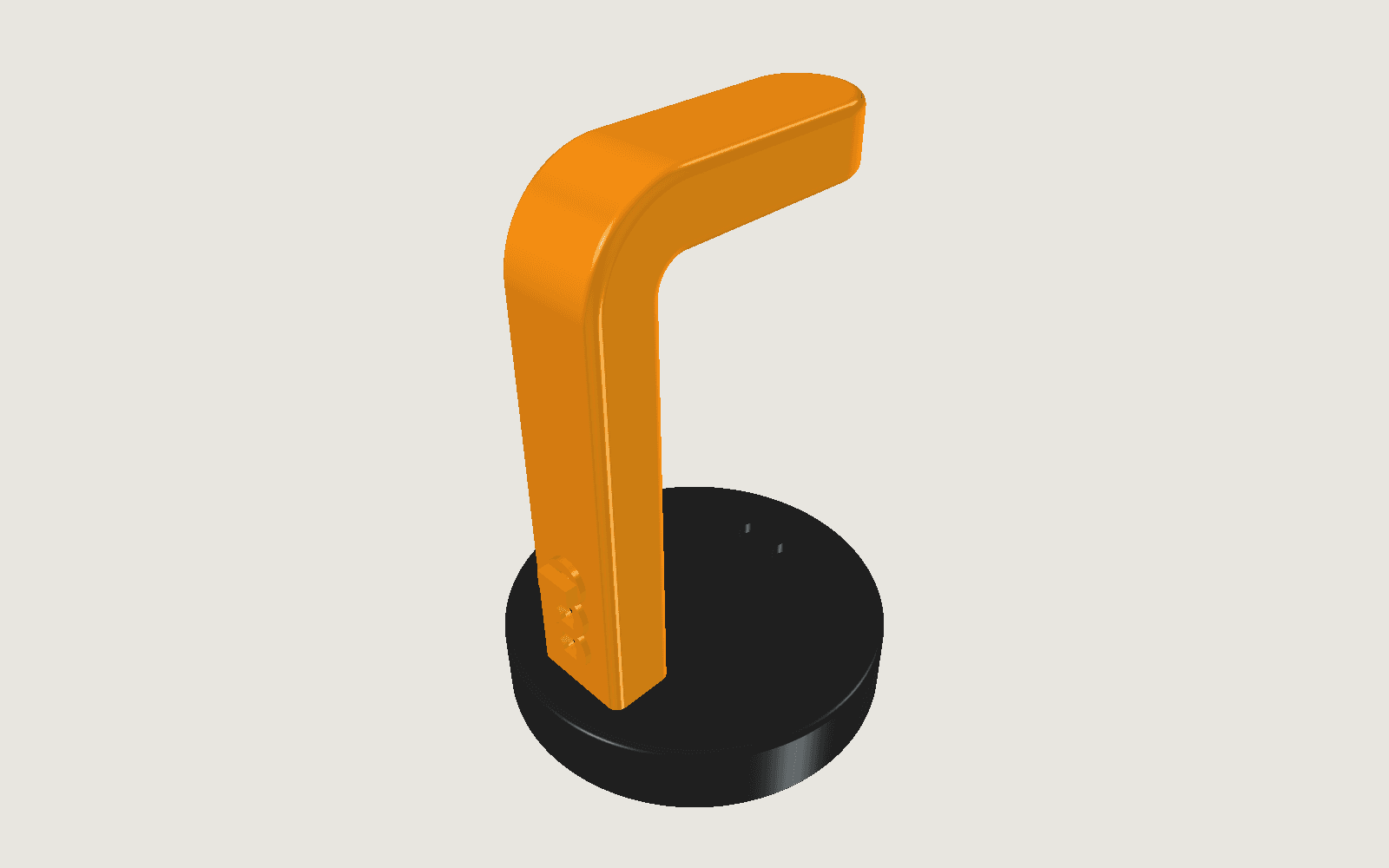
On the way to a pin I could print, the folder filled up with height locks that never should have been the main plot: pinch collars, thumbscrews, a zip-tie groove, a dovetail wedge, a rack-and-pinion tester, printed springs, bellows, clips, cams. A small museum of PETG trying to be a detent.
I am leaving that pile in the folder. That is how this one was made.
The lock that made it onto a plate is a circular pin — insert vertical, twist 90°, lugs in a race. v8 still had a tall slot that left a millimetre of slop after the turn. v9 made the hole round. That is the one I printed. It works. The arm stays.
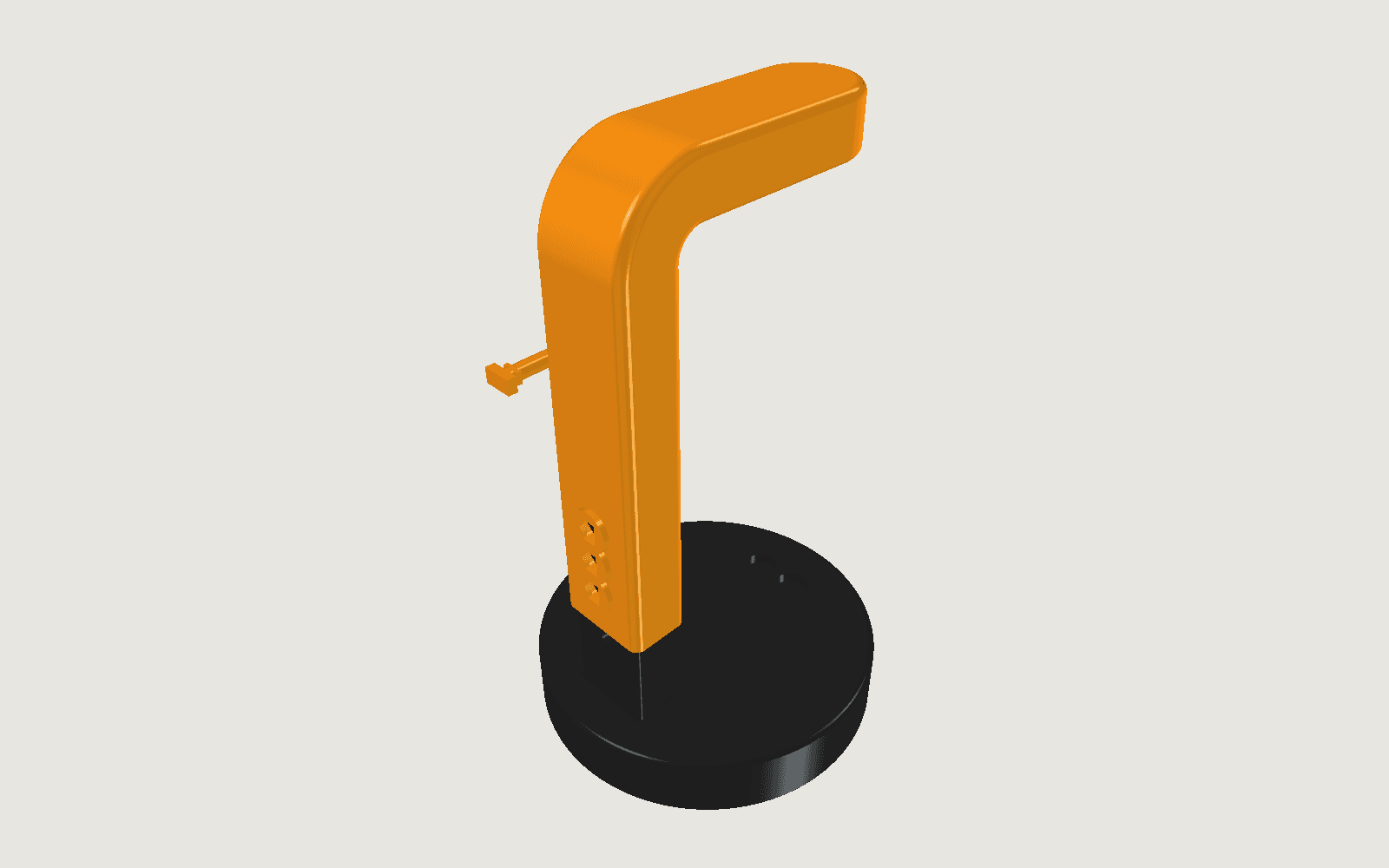
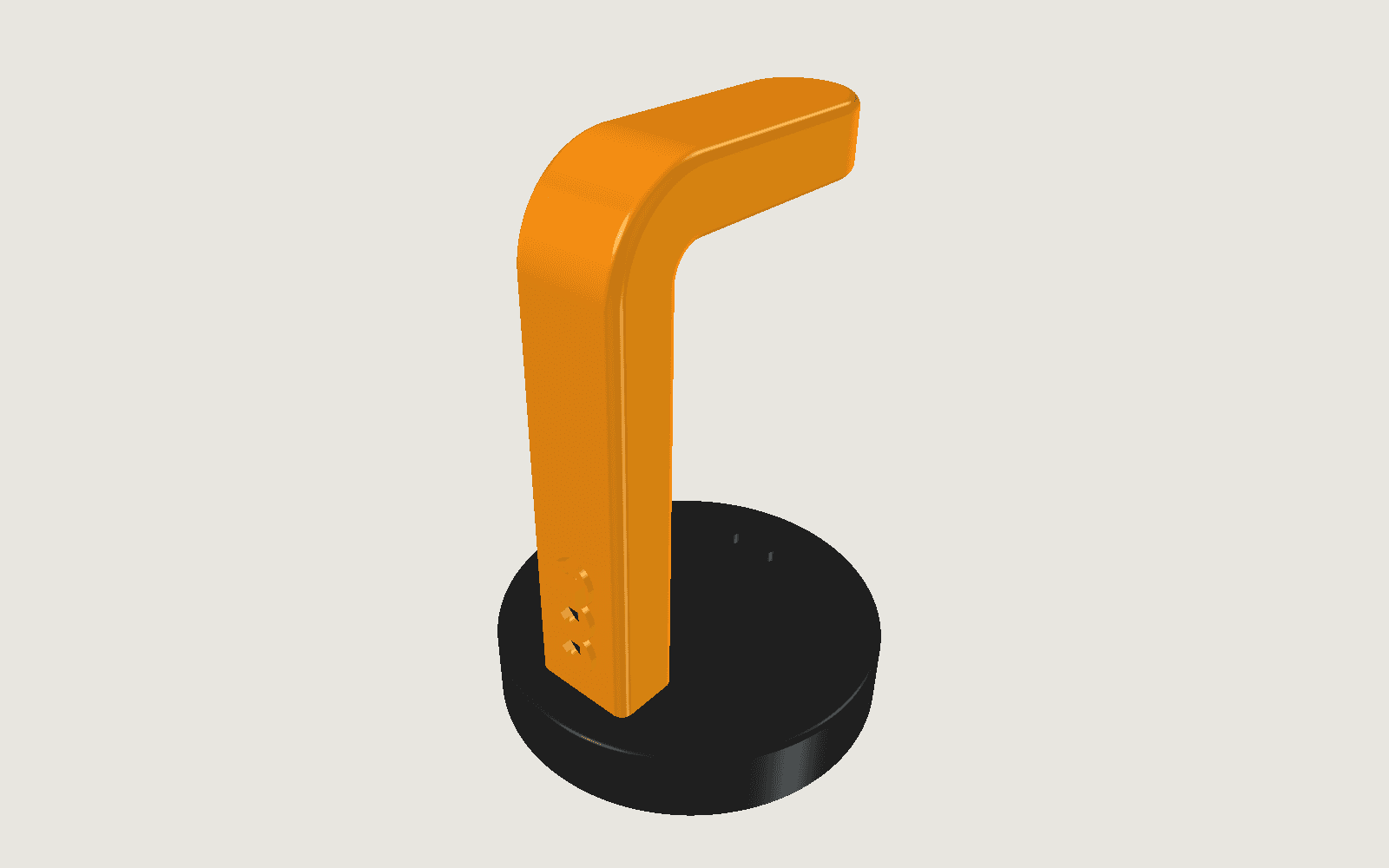
Then I put the magnets in
I had treated the hover as a detail. In the model the clock was a transparent cylinder — a ruler for a 110 mm gap, not a test.

After the print, I clicked Ø10 discs into the arm and the puck, dropped the clock ring in the middle, and watched it do exactly what a piece of iron does next to a magnet.
It did not hover. It slapped. Top set or bottom set — the ring stuck to whichever was closer and sat there, pleased with itself.
I laughed. I had suspected this before I printed. I printed the furniture anyway.
Later I even made rings to pack magnets into a nicer circle. Six pockets, then click-stop rays. They test packing. They do not test levitation. Same mistake, smaller part.
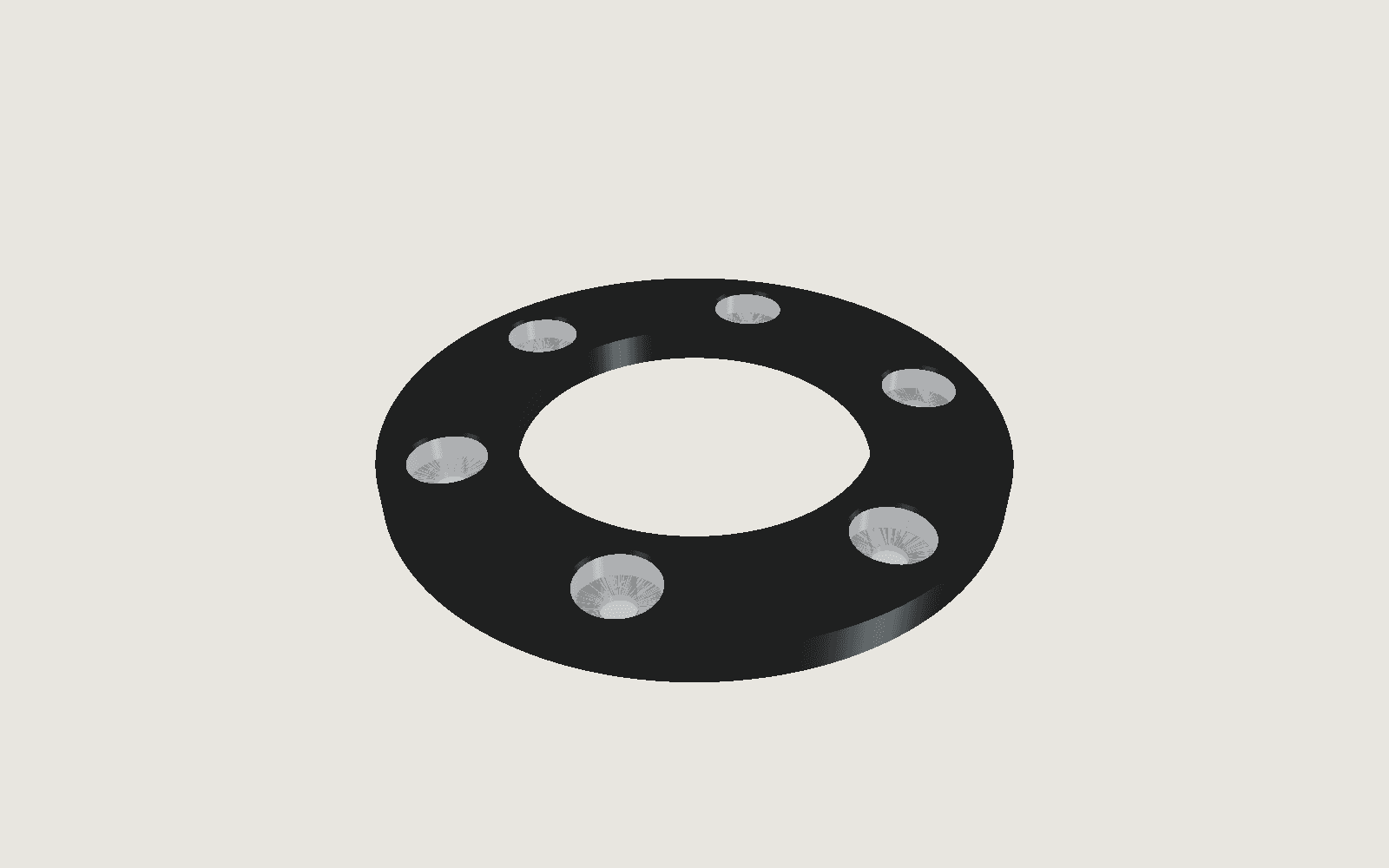
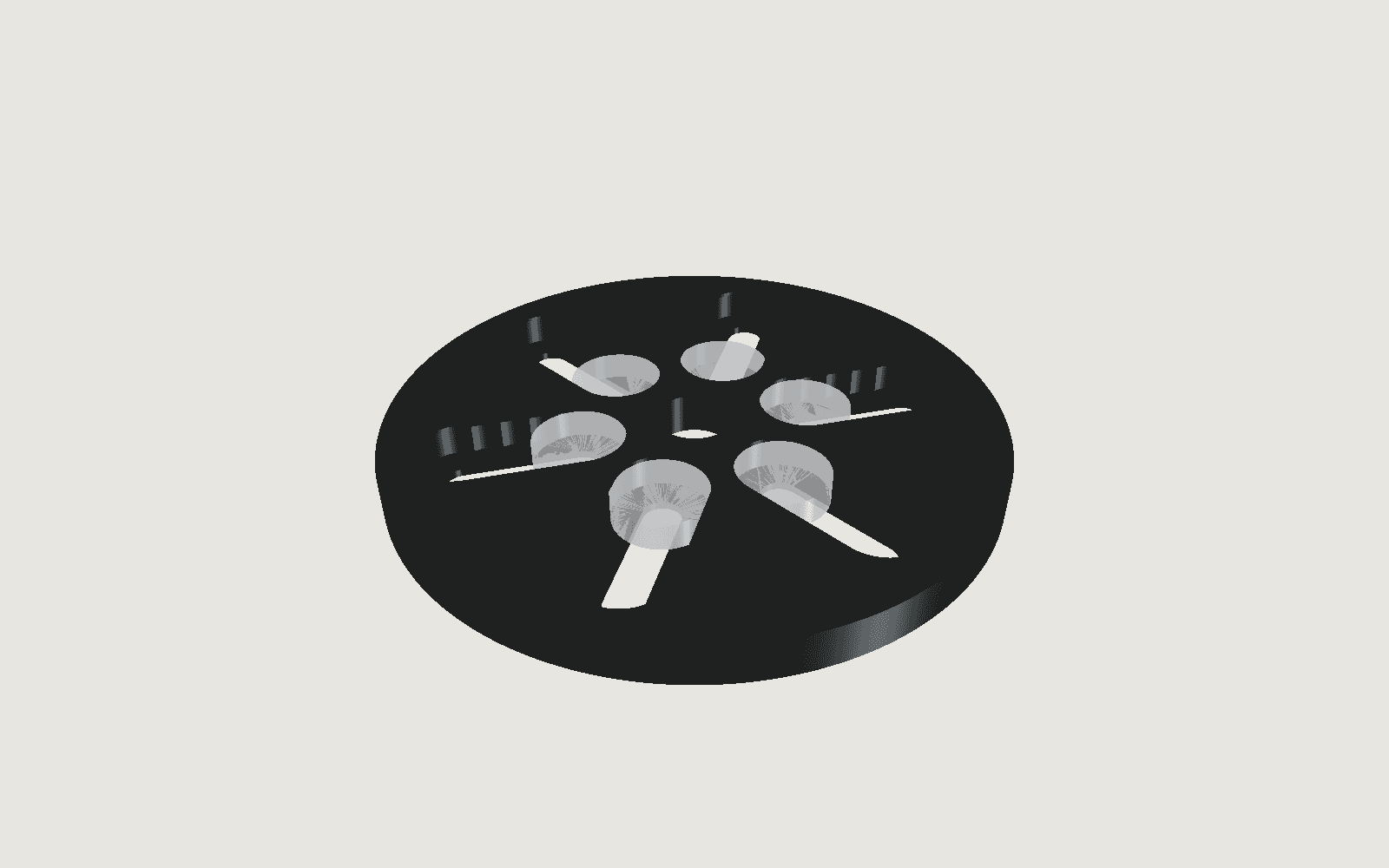
The original goal is still the goal
The stand is not a failure of making. It is a finished C-arm with a lock I am proud of, sitting under a hover I never proved.
The idea I started with is the idea I am keeping: something in that gap that actually floats.
Not only the Bubble Clock. A platform. Hot-swap the showpiece — the clock, a watch, a print, whatever we want hanging in the workshop that week. Passive discs will not hold a platform. I know that now, in plastic, not just as a suspicion. Next pass is the real one: a jig first, then coils, sensing, a driver I actually design.
This is Orbit — Project 01, the first project I am taking on as Carbora Labs.
The clock still sits. The stand still stands. The float is the work.